What I Found While Recovering from a Knee Replacement
Aug 13, 2026I've studied martial arts most of my life. Alongside that, for nearly thirty years, I've gone deep into the clinical side of the body — Rolfing®, corrective exercise, breath mechanics. That clinical work is precise and it works. But precision has a blind spot, and it took losing something to see it.
A few years ago I was recovering from a knee replacement. I hadn't practiced martial arts in a couple of years, and during that recovery I realized how much I missed it — not the fighting, but the movement itself. Flow. Breath married to motion. Spiral movement through the whole body. My clinical work had gotten very good at isolating problems and correcting them, but it had no container for integration — no practice where breath, structure, and movement come together as one continuous thing.
That's when I found Taoist medical qigong.
Medical qigong is one of the major branches of qigong — distinct from the martial and spiritual branches. It's the branch focused on the body itself: slow, spiraling movements designed to take the joints and fascia through their deepest ranges, breath that drives pressure through the system rather than riding on top of it, and attention that downshifts the nervous system while you move. It's the integration I'd been circling for decades — the flow of martial arts and the precision of clinical work, in one practice you can do on your own.
It also answered a question I'd carried for years about my clients. I can help people get out of pain — that's the work. But then what? Getting out of pain isn't the end of the process; it's the beginning of one. I've long wanted something to hand people at that point — a practice that continues the integration after the hands-on work or corrective exercises are done. Qigong is that next level.
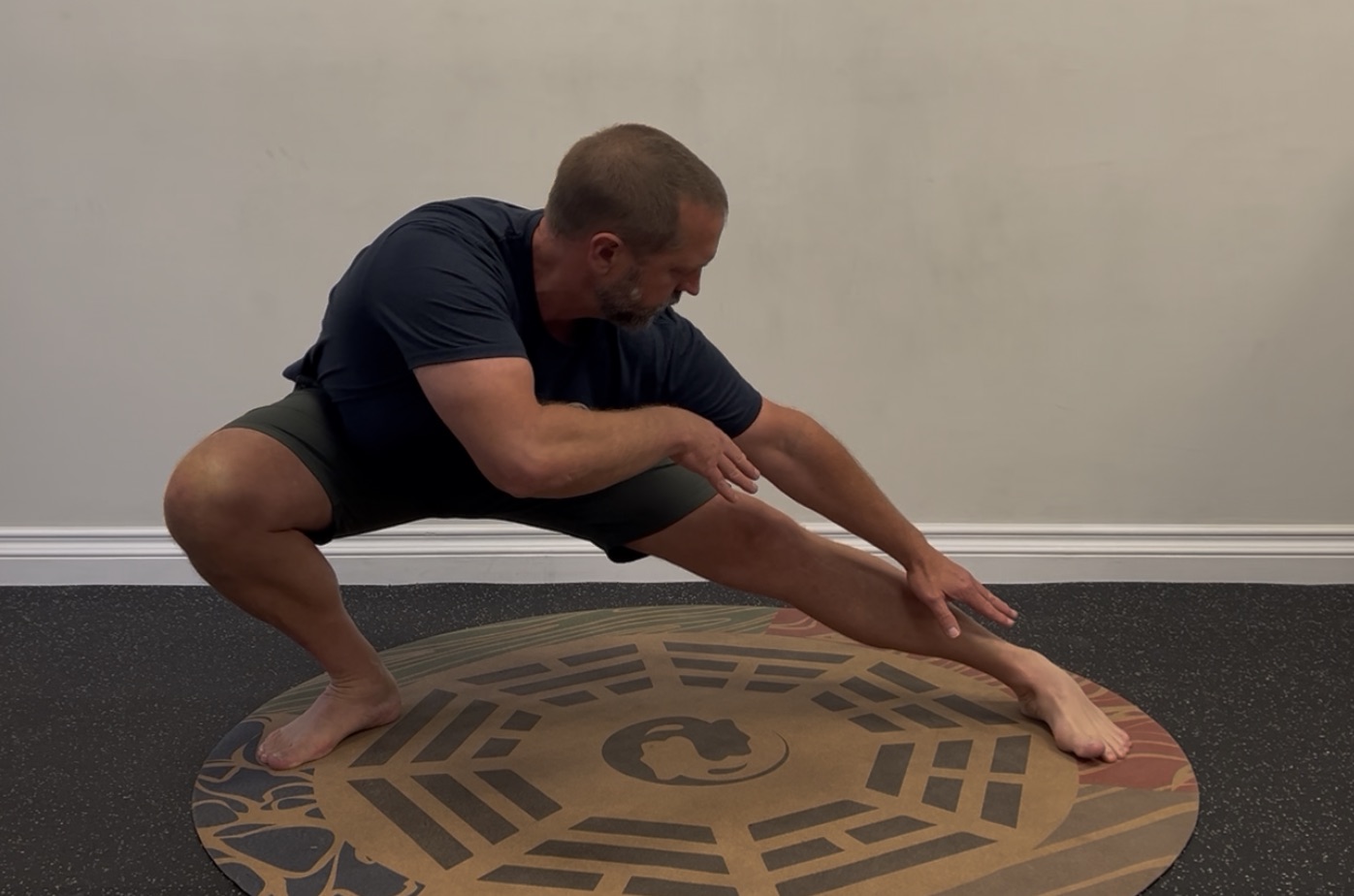
After a couple of years of study my first level is complete — with more to come — and I'm now a Certified White Tiger Qigong Instructor. I teach qigong classes in Santa Barbara; see the current series.
— Isaac
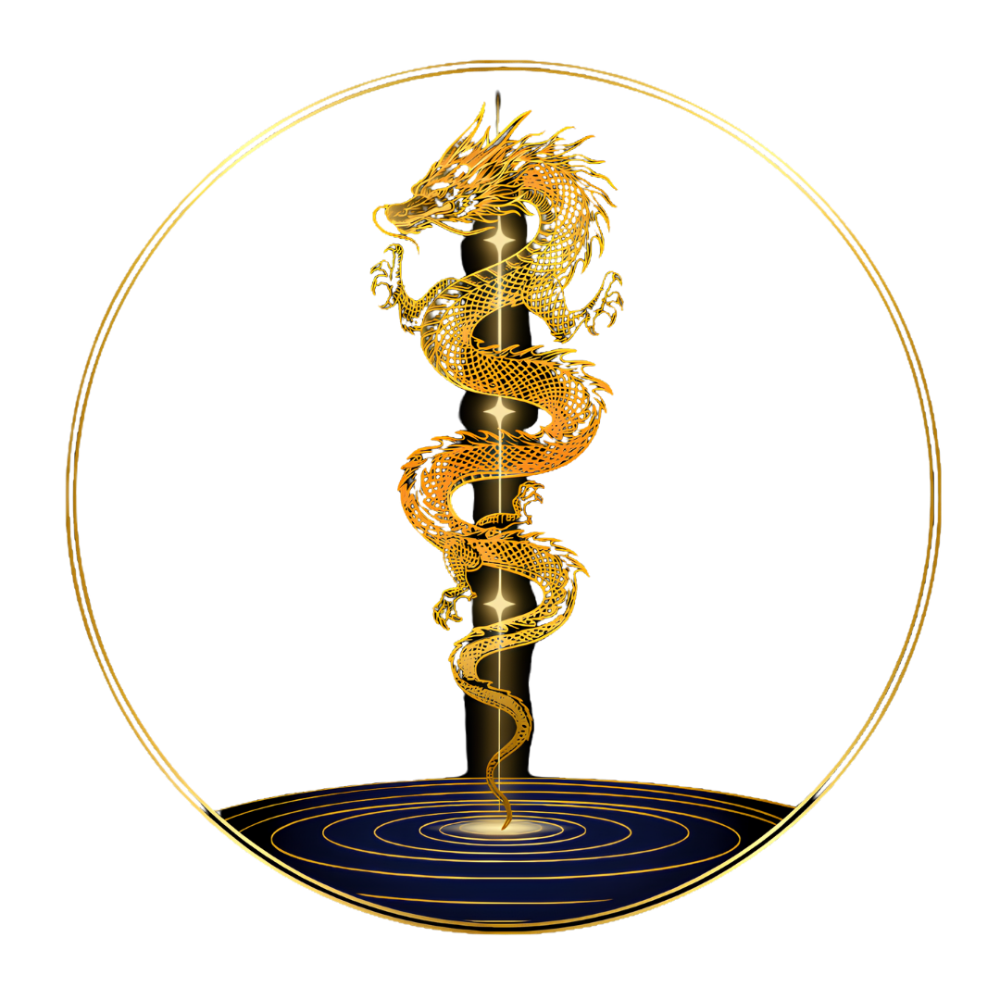
About the mark on this site: it's my own. A gold dragon rising along a vertical line out of water, with three points of light along the way — the fluid body, the axis it organizes around (Ida Rolf's Line, and the same vertical the Taoist tradition strings the Three Treasures along: Jing, Qi, Shen), and the dragon as breath and movement spiraling upward. It's this whole practice, drawn as one picture.
Rolfing® and Rolfer® are registered service marks of the Dr. Ida Rolf Institute®.