Gratitude Is Built, Not Found
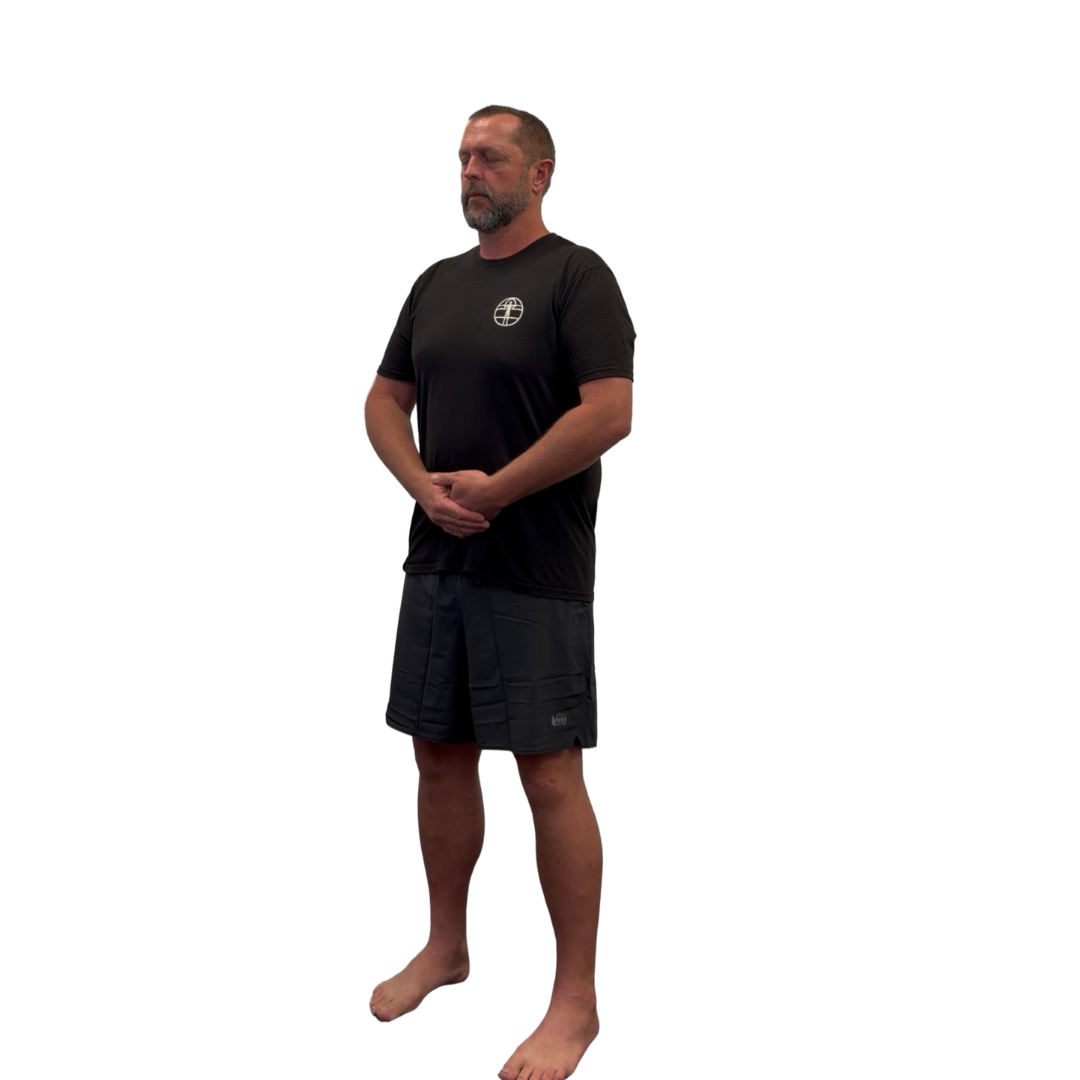
Oct 22, 2026The Dragon Meridian form I teach, from White Tiger Qigong, closes with a gratitude meditation. After forty-five minutes to an hour and a half of moving and breathing, you stand still and find something to be grateful for.
When I started, I didn't like it.
It felt awkward
It didn't feel authentic. Standing there being asked to feel grateful on cue felt a little forced, a little performed. And some days I had trouble finding anything at all. I'd reach for something and come up empty, or come up with something that felt like the right answer rather than the true one.
Tevia Feng of White Tiger Qigong puts the instruction simply: find something to be grateful for, even if it's the air you breathe. The point isn't how big the thing is. The point is finding one.
So that's what I did. Some days it was the air. Some days it was my wife. Some days it was the practice itself, or something I'd come to understand that week. It was different almost every time, and I didn't try to control what came up.
Then it changed
After a couple of weeks, something shifted. I can't point to a day it stopped feeling awkward. It just did.
What I started noticing during that closing meditation was physical. Waves of settling moved through my body. There was a sense of sinking: my weight going down into the ground while my head went up toward the sky. The effort I'd been holding let go. It wasn't something I was trying to produce. As it became more familiar, I stopped treating gratitude as something I had to perform.
I didn't find a better technique or a truer thing to be grateful for. I kept returning to the same practice, and over time it began to feel different.
Why it comes at the end
I've thought about why the gratitude comes at the close of the form instead of the beginning. My own read is that there's more room for it at the end.
At the start of practice, I'm often still in my head: the day, the list, whatever came in with me. By the end, I've spent the better part of an hour moving my body and breathing with that movement. My mind is usually quieter. I'm further into feeling than thinking.
That's the same distinction I wrote about in Why "Feel" Is Harder Than "Think". For me, gratitude asked for at the start of practice can feel like one more task. Asked for at the end, it seems to land somewhere quieter, and more directly.
What it looks like on a hard day
Not long ago I woke up not wanting to practice. I felt down and a bit overwhelmed, and I nearly skipped it. I did it anyway.
By the gratitude meditation at the end, I felt more energized and more positive about the day than when I'd started. That doesn't happen every time, and it isn't a promise to anyone else. But it's happened often enough, on enough mornings like that one, that I've stopped needing to feel like practicing before I start.
And it doesn't stay in the practice. It carries through the rest of my day.
What the research says
Gratitude has been studied extensively, and the fair summary is this: gratitude practices can help, and the average benefits are modest.
Research links a habit of noticing and appreciating the good in one's life with higher well-being. A 2025 meta-analysis brought together 145 papers involving nearly 25,000 people across 28 countries. It found small average increases in well-being, with larger effects on positive mood. The effects varied across countries and study methods. An earlier review found that gratitude exercises did not clearly outperform other activities designed to improve well-being.
In one interview study, 17 mental-health professionals and experienced health-psychology researchers emphasized meaningful engagement and regular repetition as ways to improve gratitude practices.
That advice resonates with my experience. In the practice I learned, gratitude has a deliberate place at the end. The research gives me another way to think about its value.
If it feels fake
If you try this and it feels awkward or false, that's where I started too. My advice is simple: start small, and give it time.
Find one thing you appreciate. It can be as simple as the air you're breathing. You don't have to produce a feeling on cue. Just notice it, and come back again tomorrow. For me, what felt forced at first gradually became something I looked forward to.
If you're in Santa Barbara, you can learn this form with me in my Saturday morning qigong series at Stevens Park.
— Isaac
White Tiger Qigong certification is a private, curriculum-specific credential issued by White Tiger Qigong. "WTQ Licensed" means contractually authorized to use specified WTQ curriculum and brand assets. It is not a government-issued license and does not authorize medical diagnosis or treatment.
Research
- Wood AM, Froh JJ, Geraghty AWA. Gratitude and well-being: a review and theoretical integration. Clinical Psychology Review. 2010;30(7):890–905. doi:10.1016/j.cpr.2010.03.005
- Emmons RA, McCullough ME. Counting blessings versus burdens: an experimental investigation of gratitude and subjective well-being in daily life. Journal of Personality and Social Psychology. 2003;84(2):377–389. doi:10.1037/0022-3514.84.2.377
- Choi H, et al. A meta-analysis of the effectiveness of gratitude interventions on well-being across cultures. Proceedings of the National Academy of Sciences. 2025. doi:10.1073/pnas.2425193122
- Davis DE, et al. Thankful for the little things: a meta-analysis of gratitude interventions. Journal of Counseling Psychology. 2016;63(1):20–31. doi:10.1037/cou0000107
- Huston GE, et al. Understanding and optimising gratitude interventions: the right methods for the right people at the right time. Psychology & Health. 2025;40(9):1515–1531. First published online 2024. doi:10.1080/08870446.2024.2336042
About the author
Isaac Osborne is a Certified Advanced Rolfer® and movement educator with nearly thirty years of clinical practice, a Certified White Tiger Qigong Instructor, and the author of the forthcoming book Body of Water.
Get new posts by email
One short email when a new post goes up: thoughts on fascia, breath, qigong, movement, and the space between.
No spam. Unsubscribe anytime.